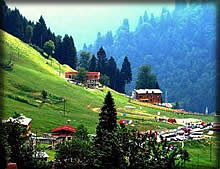
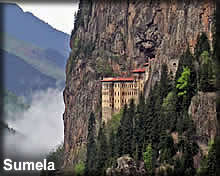
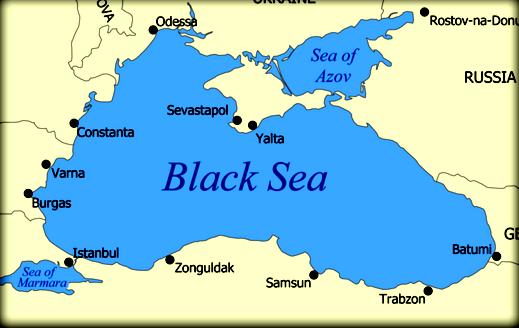
Turkey's much-lauded Black Sea region has a steep, dramatic rocky coast with rivers that cascade through the gorges of the coastal ranges. A few larger rivers, those cutting back through the Pontic Mountains have tributaries that flow into broad, elevated basins. Access inland from the coast is limited to a few narrow valleys because of these high-elevation mountain ridges. The higher slopes facing northwest tend to be densely forested. Because of these natural conditions, the Black Sea coast historically has been isolated from Anatolia.
Running from west to east the narrow coastal strip widens at several places into fertile, intensely-cultivated deltas. The Samsun area, close to the midpoint, is a major tobacco-growing region; and, east of here are numerous citrus groves. East of Samsun, the area around Trabzon is world-renowned for its production of hazelnuts (and is the world's number-one exporter) and, still further east, the Rize region boasts numerous tea plantations that sate the country's appetitie for the black brew.
All cultivable areas, including mountain slopes wherever they are not too steep, are sown or used as pasture. The southern slopes — facing the Anatolian Plateau — are less-wooded, but the northern slopes contain dense growths of both deciduous and evergreen trees as well as tea plantations.
|
 |
|
|
|
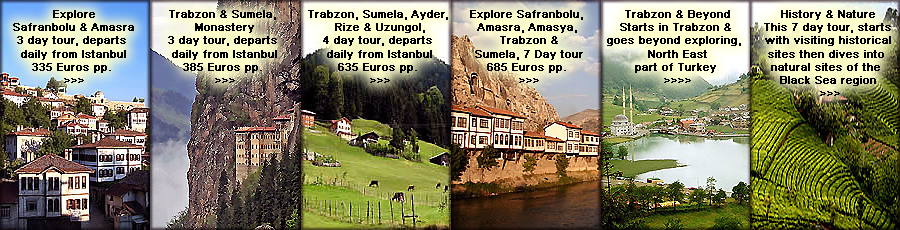
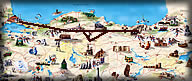
~ Black Sea Region - 10 Days
Starts in Istanbul; explore Safranbolu, Amasra, Ankara, Hattusas, Amasya, Trabzon, Sumela Uzungol, and Ayder.
1285 Euros per person; includes: hotels, transfers, domestic flight tickets, admissions, taxes and service charges.
(Click here to see the full itinerary.)
>>>>>>>
|
|
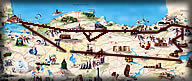
~ Black Sea & Eastern Turkey - 12 Days
Explore Ankara, Hattusas, Amasya, Trabzon, Sumela, Kars, Ani, Dogubeyazit, and Van.
1885 Euros per person; includes: hotels, transfers, domestic flight tickets, admissions, taxes and service charges.
(Click here to see the full itinerary.)
>>>>>>> |
|
|
|