Itinerary:
Day 1 - (L)
Around 9:00 AM, you will be picked up from your hotel for this wonderfully educational all-day tour through the Turkish countryside.
We'll visit Priene, Miletus and Didyma; after the tour, at about 5:00 PM, you will be transferred to your hotel (or we can always drop you off at the harbor or downtown).
Sites you'll see today:
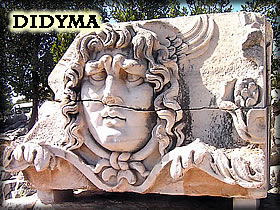
* Didyma was not an ancient city, but rather a sacred place of pagan worship. Its fame rests with the great Temple of Apollo, built in the 7th-8th century BC, although the works seen today are from the 4th century efforts of Alexander the Great. The Diymaion Temple was the 3rd largest temple in the ancient world. Soothsaying and prophecies were told here by an elite group of priests for 1,400 years until Christianity became the state religion of the Byzantines and ended pagan practices. The temple was famous for its Oracle that gave divine information about the future to the priests who then relayed such prophecies to worshippers.
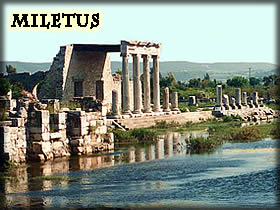
* Miletus was an important commercial and governmental center from 700 BC until 700 AD. Although today this ancient city is surrounded by farm land, when it was at its peak, the Aegean Sea rose up to the city walls. You can still see where the harbor once brought goods to and fro.
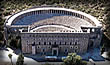
The most memorable part of visiting Miletus is to sit in the 15,000-seat ancient theatre, and then wander the passageways that connect the sections of the theatre. Miletos was known as a city of philosophers who were at the forefront of scientific inquiry. Milesians were the forerunners of cartography; they also were effectively predicting lunar eclipses, planning towns, recognize the atom and construct an accurate sundial.
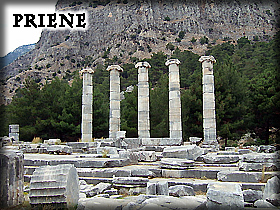
* Priene's dramatic mountain setting overlooks the farmland below. It dates back to 300 BC when it was one of the League of Ionian Cities. Its ancient population was 5,000 and had a well-planned grid system design for its streets. In ancient times, it had a port built by the Romans period near the Maiandros River silted up the land into a swamp.
Free pick-up service is available from all hotels in Kusadasi and Selcuk.
Price: 60 Euro per person - contact us for early booking discounts
Includes
* Pick-up and drop-off at your hotel
* Professional, English-speaking tour guides
* Admissions to Priene, Didyma and Miletus
* Lunch at a traditional restaurant
*
All taxes and service charges
|